

Knowledge base
EV vs Hybrid: Which Should You Buy?
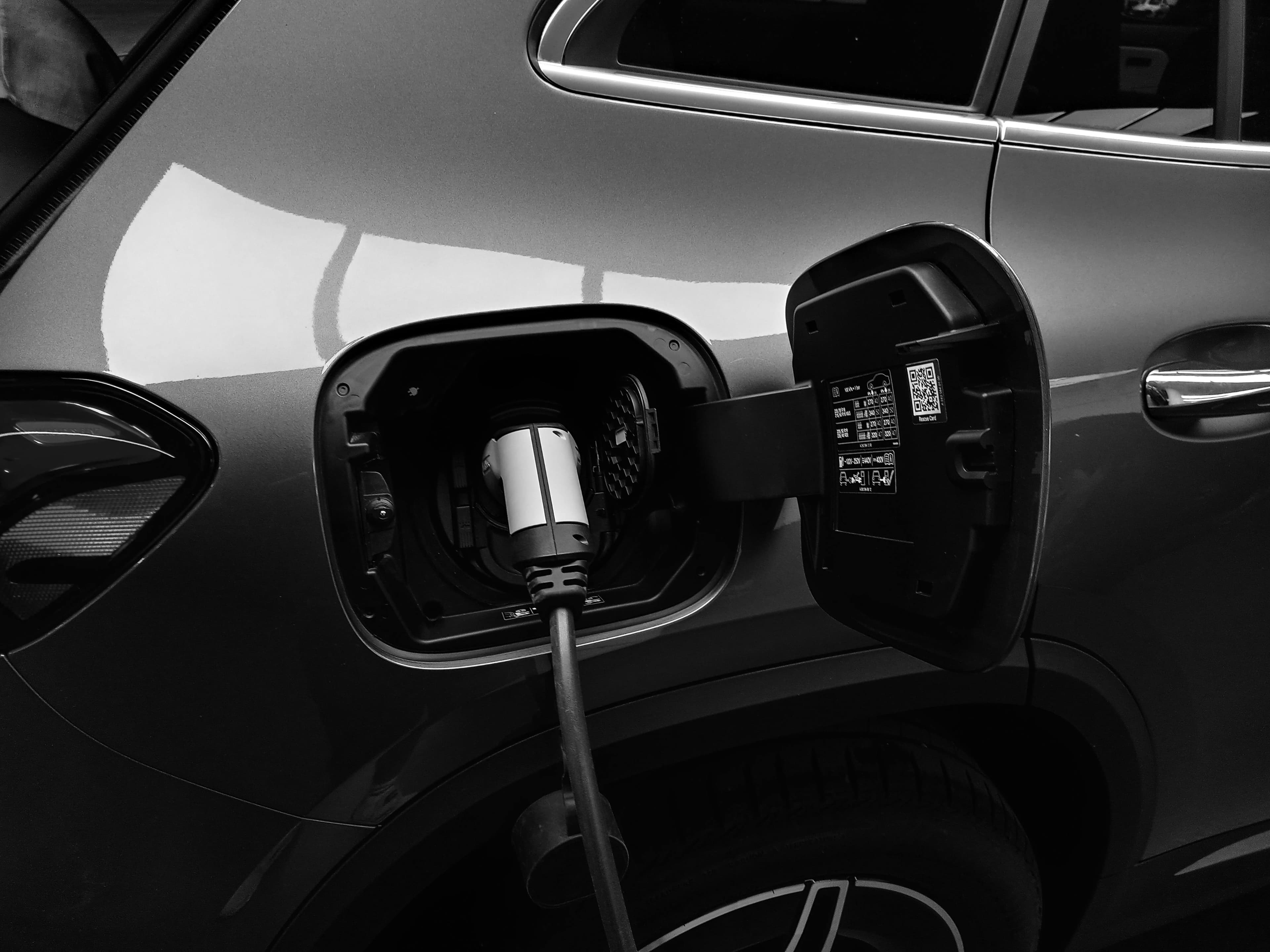
A full battery electric vehicle (BEV) has the lowest running costs and zero tailpipe emissions, while a hybrid needs no charging infrastructure and suits drivers doing very long distances without reliable fast chargers. The right choice comes down to your access to charging, how far you drive, and how much of the purchase price you want offset by lower running costs.
Here is a straightforward comparison.
What is the difference?
Battery Electric Vehicle (BEV). Runs entirely on electricity. No petrol engine. You charge the battery and that is your fuel. When the battery is flat, you need to charge it.
Hybrid (HEV). Has both a petrol engine and a small electric motor. The electric motor assists the petrol engine to improve fuel efficiency. You never plug it in, the battery charges itself through regenerative braking and the petrol engine.
Plug-in Hybrid (PHEV). Has both a petrol engine and a larger electric motor with a battery you can plug in and charge. You can drive a limited distance on electric only (usually 40 to 80 kilometres), and the petrol engine takes over when the battery runs out.
Running costs
Full EVs win on running costs. Electricity is cheaper than petrol, and servicing costs are lower because there are fewer moving parts, no oil changes, and no exhaust system.
Hybrids are cheaper to run than a standard petrol car, but more expensive than a full EV because you are still buying petrol and maintaining a combustion engine (plus the electric components).
Plug-in hybrids sit in between. If you charge regularly and your daily driving is within the electric range, you can do most of your driving on electricity. But if you never plug in (which is surprisingly common), a PHEV can actually be less efficient than a standard hybrid because of the extra weight of the larger battery.
For a detailed look at EV running costs, see our comparison of EV running costs vs petrol cars.
Range and charging
This is where hybrids have an advantage for some drivers. A hybrid never needs to be plugged in. You fill it with petrol like any other car. There is no range anxiety, no need for home charging, and no planning around charging stops on road trips.
A full EV requires access to charging, ideally at home. If you have a garage or driveway and your daily driving is under 300 kilometres, charging is not an issue. For longer trips, you rely on the public charging network, which is growing but not yet as convenient as a petrol station on every corner.
A plug-in hybrid gives you the best of both worlds on paper, but only if you actually plug it in. If you do not, you are carrying around a heavy battery for no benefit.
Environmental impact
A full EV produces zero tailpipe emissions. The overall environmental impact depends on how your electricity is generated, but even on a grid that includes coal and gas, an EV is typically cleaner over its lifetime than a petrol or hybrid vehicle.
Hybrids produce lower emissions than a standard petrol car but are not zero-emission.
Plug-in hybrids can be close to zero-emission for short trips on electric mode, but produce emissions whenever the petrol engine is running.
Purchase price
Hybrids are generally the cheapest option, as they are essentially a petrol car with some electric assist. Full EVs tend to be more expensive upfront, though the gap has narrowed significantly. Plug-in hybrids sit in the middle to upper range because they carry both a full combustion drivetrain and a sizeable battery.
Still weighing models? You can sort the funding picture at the same time.
A broker can outline how different structures usually work for the price band you are looking at, without locking you in.
Quick questions welcome - not a full application.
Remember that purchase price is only one part of the cost. Lower running costs can offset a higher purchase price over time, especially if you keep the vehicle for several years.
Tax and incentives
Full EVs are currently eligible for the fringe benefits tax exemption (subject to criteria), which can save significant money for business buyers and salary sacrifice arrangements. Plug-in hybrids may or may not qualify depending on current eligibility rules. Standard hybrids do not qualify.
Check the current rules before making a decision. Our guide on EV government incentives covers the latest.
So which should you choose?
Go full EV if you have access to home charging (or reliable workplace charging), your daily driving is comfortably within the vehicle's range, you want the lowest running costs, and you want to take advantage of EV-specific tax incentives.
Go hybrid if you do not have access to reliable charging, you regularly drive very long distances without access to fast chargers, you want improved fuel efficiency without changing your driving habits, or you want a lower purchase price.
Want repayment clarity before you decide?
Tell us what you are comparing and we can help you understand what repayments and structures might look like in practice.
Go plug-in hybrid if you have a short daily commute that fits within the electric-only range, you want the safety net of a petrol engine for longer trips, and you will actually plug it in and charge it regularly.
For a broader look at vehicle finance, visit Aussie Finance Hub. If you are also considering a standard car, car finance is available through the same broker team.
Made your decision?
Whether it is a full EV, a hybrid, or a plug-in hybrid, a specialist EV finance broker can help you find the right finance structure for it. Tell us what you are looking at.
Or call 1800 4 NUDGE (1800 468 343).